
Why Mobile-First SaaS is the Future? Designing Products for 85% of Business Apps That Are Cloud-Based
Did you know that over 60% of the global population uses a smartphone every day to browse social media, shop online, and run their businesses? With billions of users spending hours on mobile apps, mobile usage now fuels a multi-trillion-dollar digital economy, including a rapidly growing SaaS landscape.
Think about it. You download an accounting app to manage monthly finances. You install a fitness app to follow a personalized workout plan and track your daily progress. These are everyday interactions with cloud-based SaaS products, even if users don’t consciously label them as such.
For enterprises building or scaling SaaS products, this reality sends a clear message: success today depends on a mobile-first approach. Mobile devices are more accessible, more personal, and more frequently used than desktops—and software that isn’t designed with mobile at its core risks falling behind.
Let’s explore why mobile-first SaaS is becoming the most scalable, resilient, and future-ready model in a mobile-driven software world.
A. Why Approach Mobile-First SaaS?
From a business perspective, mobile-first SaaS scales more efficiently. It supports wider reach, higher engagement, and better retention, while reducing long-term redesign and maintenance costs. As user behavior continues to shift toward mobile-driven interactions, a mobile-first approach isn’t just a design choice—it’s a strategic advantage for building future-ready software.
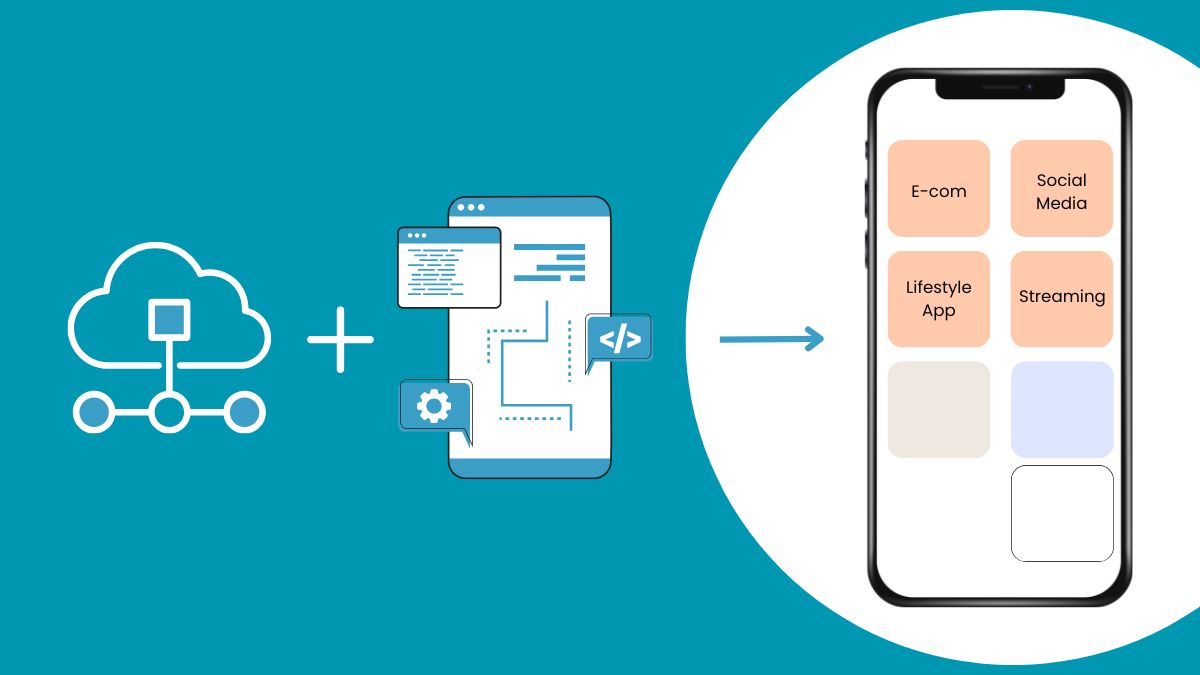
Let’s summarize it in five basic points.
1. User Behavior Has Permanently Shifted
With most of the workforce regularly on the move, using mobile becomes more accessible. They look up on their phones during commutes, review alerts between meetings, and make decisions in the palm of their hand.
For enterprise building or scaling SaaS products, it indicates:
- Users expect apps to load quickly, be easy to navigate, and let them finish tasks comfortably on small screens.
- If a mobile experience feels slow or confusing, users lose interest before they even explore advanced features.
2. Market Survival Depends on Mobile-First Execution
According to Thinkwithgoogle, even a three-second delay in loading time can reduce conversions by up to 40% on mobile.
Ignoring this reality puts SaaS providers at a competitive disadvantage.
- Competitors with optimized mobile experiences win attention first.
- Users are quick to abandon poor mobile interfaces in favor of smoother alternatives.
- When an app delivers a poor mobile experience, the cost of attracting new users increases, especially since most traffic from social media and search comes from mobile devices.
3. Mobile Drives Competitive Advantage
Mobile is not merely a smaller screen version of a desktop. It requires a fundamentally different approach to interaction, speed, and workflow.
When SaaS platforms are built mobile-first:
- Interfaces become simpler and more focused on core user tasks.
- Performance improves because designs prioritize essentials over excess.
- Engagement rises as users complete actions quickly and smoothly.
4. Long-Term Growth Is Built on Accessibility
A mobile-first strategy does more than meet current behavior. It prepares SaaS products for future growth.
- It reaches emerging markets where mobile access leads internet usage.
- It supports remote and hybrid workforces that rely on on-the-go tools.
- It enables real-time communication and collaboration, essential for modern teams.
When software works smoothly on all devices, more people adopt it faster, and user networks grow stronger, even as device preferences change over time.
5. Mobile-First Must Be a UI Choice
Mobile-first requires rethinking product architecture:
- Prioritize speed and responsiveness.
- Tailor experiences to real user contexts.
- Design features that are built for how people use mobile devices, rather than adapting desktop-style designs later.
Companies that embrace this mindset lead the mobile era.
B. How to Go About Mobile-First SaaS
Mobile-first SaaS succeeds or fails at the design level. These principles define high-performing platforms.
|
Principle |
What It Means |
Why It Matters |
Best Practices |
|
Start With the Smallest Screen |
Design for mobile first—not as an afterthought. |
Forces teams to focus on what truly matters to users. |
Clarify priorities, simplify workflows, and remove friction early. |
|
Design for Touch, Not Clicks |
Mobile UX relies on gestures, thumbs, and tap-friendly layouts. |
Desktop patterns don’t translate well to mobile behavior. |
Use large buttons, natural gestures, and thumb zones. |
|
Optimize for Speed & Clarity |
Mobile users expect instant feedback and clear actions. |
Even minor delays lead to drop-offs and churn. |
Fast loading, minimal steps, concise messaging. |
|
Use Context to Add Value |
Mobile provides signals like location, time, and usage patterns. |
Contextual experiences feel more competent and more helpful. |
Suggest the following actions, send timely reminders, and personalize content subtly. |
|
Accessibility Is Non-Negotiable |
Mobile SaaS must work for everyone. |
Inclusive design improves usability for all users. |
High contrast, readable text, voice support, and assistive compatibility. |
C. How Mobile-first SaaS Drives Engagement and Retention
Enterprises that focus on improving mobile experiences for users are likely to see measurable improvements in engagement, customer retention, and market competitiveness, and many of the mobile SaaS available in the market prove it.
Slack, Google Workspace (Gmail, Drive, etc.), Zoom, Shopify, Canva, Netflix, and many such successful examples of Mobile SaaS.
Here is how you can approach their formula to succeed.
1. Mobile Drives Daily Engagement
Mobile-first SaaS meets users where they already are, on their phones, instead of requiring them to open a laptop.
Features like push notifications, biometric logins, and real-time alerts help them keep hooked to your SaaS, while increasing daily activity, a key metric for SaaS valuation and long-term success.
2. Higher Retention and Lower Churn
Mobile users can act immediately rather than “doing it later,” removing friction from everyday workflows and increasing perceived value through on-the-go use.
In fact, research also shows that products with seamless mobile experiences keep users longer than desktop-only platforms.
Focus on building apps with a shorter sales funnel, quick logins, and free trials to engage the audience.
3. Competitive Advantage in Crowded Markets
A mobile-first SaaS approach enables faster onboarding, improved accessibility, stronger brand perception, and greater visibility in app stores.
In many industries, mobile-first products already outperform traditional SaaS options simply because they are easier to use, such as daily lifestyle apps that track workouts, diet plans, pet care, stock market alerts, etc.
Find your niche and focus on how your SaaS can improve their lives, even in a small proportion.
4. APIs Empowering AI Adoption
Artificial intelligence plays a significant role in improving and scaling SaaS because machine learning, an AI model, is omnipresent today.
You will find AI in almost every facet of technology, including.
- Predictive recommendations.
- Smart notifications.
- Automated workflows.
- Context-aware personalization.
- Smart contracts minimize underwriting duration.
Mobile devices generate rich behavioral data, including location patterns, time-of-use, tap and swipe behavior, search history, app navigation paths, device type, screen size, session length, notification responses, and offline/online activity.
By analyzing this data in real time, enterprises can understand user intent and context and implement the same while scaling SaaS.
4. Cloud-Native and API-Driven Architectures
Modern SaaS platforms are built for flexibility.
Cloud-native systems and API-driven architecture allow seamless cross-device syncing, faster feature updates, smooth scaling, and easier mobile optimization.
It makes SaaS adaptable to the users’ demands. For example, you can access the Facebook feed, messages, and posts from both browser-based and mobile-based applications without any cross-device lag.
D. How to Overcome the Challenges and Solutions
Here is the outline of the key challenges mobile-first SaaS platforms face and the practical solutions used to overcome them.
|
Challenges |
Practical Solutions |
|
Limited screen space makes it harder to display complex dashboards and workflows on mobile devices. |
Innovative UI/UX design with progressive disclosure shows only essential data on mobile and reveals advanced features on larger screens. |
|
Dependence on internet connectivity can affect performance in regions with unstable networks. |
Progressive Web Apps (PWAs) use caching and offline support to improve speed and reliability. |
|
Limited access to native device features like Bluetooth, advanced camera controls, or background processes. |
The hybrid SaaS approach uses lightweight native wrappers only where deep hardware access is needed. |
|
Security and data privacy concerns, especially for enterprise and regulated industries. |
Enterprise-grade security practices such as encryption, SSO, role-based access, and centralized updates strengthen trust. |
|
User perception that web apps are inferior compared to native mobile apps. |
Clear onboarding and education highlight benefits like instant access, cross-device syncing, and zero updates. |
|
Complex feature overload can overwhelm mobile users. |
Feature prioritization ensures mobile users get task-focused workflows first. |
|
Performance limitations on low-end devices. |
Optimized front-end performance with lightweight assets and efficient APIs. |
|
Cross-browser inconsistencies on mobile web. |
Modern web standards and testing tools ensure consistent behavior across devices. |
E. What the Future Holds for Mobile-SaaS
The future of SaaS is undeniably mobile, and the trend is accelerating.
1. Mobile as the Primary Interface
For many users, mobile devices and tablets will become the primary way they interact with SaaS. Meanwhile, desktops and laptops will be secondary choices.
Products that fail to adapt risk becoming irrelevant.
2. Voice, Wearables, and Ambient Computing
Mobile-first SaaS will expand beyond phones. You will find them in voice assistants, smartwatches, AR interfaces, and network-connected devices.
A few examples include a workout tracker, an alert-and-reminder setup, and a health status monitor.
3. Vertical-Specific Mobile SaaS Growth
Industries like healthcare, finance, education, logistics, and field services are rapidly adopting mobile-first SaaS tailored to real-world workflows.
Soon, niche, mobile-optimized SaaS solutions will outpace generic platforms.
Conclusion
In a modern SaaS environment where users want fast, easy-to-use software that fits naturally into their daily routines, mobile delivers precisely that.
For founders and product teams, going mobile-first helps attract users, keep them engaged, and stay ahead of competitors, while delaying can lead to falling behind.
Furthermore, for swift SaaS and mobile application development, contact Searchable Design, the most reliable app development company in the US.
Related Post

API-Centric Architecture: The Present & Future of SaaS
RECOMMENDED POSTS


RECOMMENDED TOPICS
TAGS
- artificial intelligence
- agentic ai
- ai
- machine learning
- deepseek
- data science
- llm
- growth engineering
- ai/ml
- saas
- chatgpt
- ai development
- gpt
- openai
- application
- cloud storage
- api based architecture
- modular saas
- mobile development
- scalable architecture
- software engineering
- enterprise security
- aws
- api
- social influencers
- social media marketing
- social media
- cloud optimization
- gcp
- deep learning
- python
- user experience
- app development
- user interface
- data analysis
- data pipeline
- generative ai
- deepfake
- cybersecurity
- bot
- offshoring
- outsourcing
- captive center
- blockchain
- data security
- modern medicine
- climate change
- llm models
- leadership
- it development
- empathy
- static data
- dynamic data
- ai model
- open source
- xai
- qwenlm
- bpa
- automation
- healthcare
- cloud management
- growth hacks
- data roles
- data analyst
- data scientist
- data engineer
- data visualization
- productivity
- database management
- sql query
- data isolation
- db expert
- database optimize
- customer expectation
- sales growth
- test
- artificial intelligene
ABOUT
Stay ahead in the world of technology with Iowa4Tech.com! Explore the latest trends in AI, software development, cybersecurity, and emerging tech, along with expert insights and industry updates.
Comments(0)
Leave a Reply
Your email address will not be published. Required fields are marked *